No NNPC, CBN Borrowing for Three Months -Tinubu
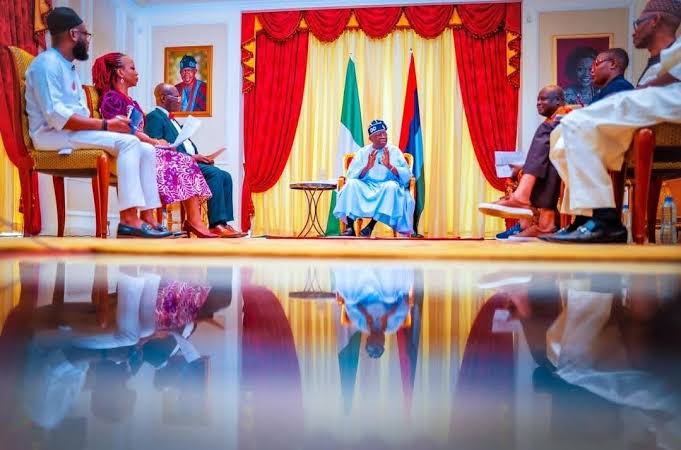
President Bola Tinubu has announced that he has met Nigeria’s financial obligations for the past three months without resorting to the Nigerian National Petroleum Corporation Limited (NNPCL) or relying on “Ways and Means” loans from the Central Bank of Nigeria (CBN).
In his first media interview on Monday, President Tinubu expressed confidence in the country’s financial management under his leadership, asserting that he had fulfilled all of Nigeria’s financial commitments without relying on previous funding sources that had been criticized for exacerbating the country’s fiscal challenges.
“Push me to my brag mode, in the last three months, I’ve not taken a penny from NNPC before I meet my other obligations. To me, that is excellent, Without going into Ways and Means, I’ve met all obligations.” Tinubu said.
The president’s statement came amid heightened scrutiny of Nigeria’s economy, which has been grappling with inflation and high levels of public debt. Tinubu’s administration has focused on reducing reliance on the controversial practice of borrowing from the CBN, a mechanism that allows the government to print money to meet short-term financial needs, but which critics argue leads to inflation and destabilizes the economy.
Tinubu’s statement also followed remarks from CBN Governor Olayemi Cardoso in September, who blamed former CBN Governor Godwin Emefiele for worsening the country’s economic situation by printing excessive amounts of money during his tenure. The money supply in Nigeria, Cardoso revealed, had grown from N19 trillion in 2015 to N54 trillion in 2023, a sharp increase that critics say contributed to soaring inflation.
In his response, President Tinubu emphasised the importance of fiscal discipline and the dangers of previous policies that flooded the economy with money. “The printing of money resulted in a huge amount of money chasing the same amount of goods or a relative amount of goods,” he noted. “That context is very important to have.”
The president’s comments have been welcomed by some observers as a step toward more sustainable fiscal management, though others remain cautious, noting the complexity of Nigeria’s economic challenges and the need for continued reforms.






Post Comment