Ex-HOS: State of Emergency Saved Rivers from Chaos
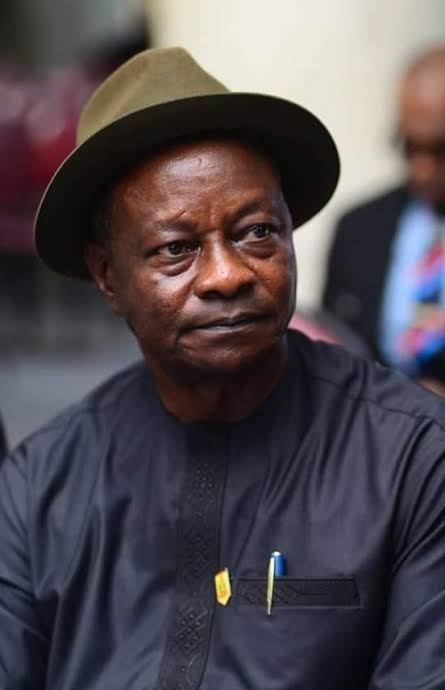
Dr. George Nweke, the former Head of the Civil Service in Rivers State, has revealed that the declaration of a state of emergency by President Bola Tinubu played a crucial role in preventing chaos in the state.
Speaking to journalists in Port Harcourt, Nweke disclosed that suspended Governor Siminalayi Fubara was behind several destabilizing actions in the state, including orchestrating the destruction of public buildings and other malicious schemes.
Read also:Rivers State Head of Service Resigns, New SSG Appointed
Nweke also clarified that he was neither dismissed nor pressured to resign from his position, but left voluntarily.
He expressed his gratitude to President Tinubu for his timely intervention in the state’s political crisis, particularly for the declaration of the state of emergency, which was subsequently ratified by the National Assembly.
In his address, Nweke stated:
“Fellow Rivers people, it is with great humility that I speak to you today as your former Head of Service. You will recall that I was appointed to this position by our suspended governor, Siminalayi Fubara. I would like to take this opportunity to thank him for the opportunity to serve. In light of the widespread misinformation in the media, I want to set the record straight: I was neither dismissed nor pressured into resigning. I made the decision to leave freely, from the bottom of my heart.
“As an insider, having worked closely with Governor Fubara, it would be wrong for me to stay silent about certain critical issues that have affected our state, or that could continue to do so if this destructive path is allowed to persist.
“I would like to thank President Tinubu for his swift intervention, particularly the declaration of a state of emergency in Rivers State, which was subsequently approved by the National Assembly. Had this intervention not occurred, Nigeria would have been faced with a severe economic crisis, and Rivers State could have been engulfed in violence.
“The trouble began when Governor Fubara allegedly instructed his Chief of Staff, Edison Ehie, to burn down the Rivers State House of Assembly to prevent his impeachment. That evening, Edison was at the Government House with two accomplices, including former Obio/Akpor LGA chairman Chijioke. I was present when a bag of money was handed to Edison for this operation, though I do not know the amount. I want to make it clear to the people of Rivers that the House of Assembly building on Moscow Road was set on fire under Fubara’s orders. I challenge him to an open confrontation if he denies this.
“The next day, I almost resigned, but I was hesitant because I knew the power a sitting governor holds, and he was aware that I knew about his plans and was uncomfortable with his actions.
“There was also an attempt to demolish the residential quarters of the House of Assembly members. This was only thwarted by a press conference held by Rivers youths, elders, and National Assembly members. Had that conference not taken place, it could have been another senseless act of destruction in our state.
“Later, Governor Fubara himself told me that he wished he had known sooner about the House of Assembly’s new hall so that he could have destroyed it before targeting their residential quarters. I was appalled—how could a leader be so reckless as to destroy state property and waste public funds for personal vendettas?
“I also want to address those who have criticized the state of emergency declared by the President. I understand their concerns, but they are only seeing part of the picture. If President Tinubu had not acted decisively, we might not know who would have been affected by the schemes that were in the works. I thank Mr. President for his decision to declare the state of emergency in Rivers State for six months, and I urge him to continue his focus on the state, as much more is unfolding there under Governor Fubara’s leadership.
“Another reason for my removal was when Governor Fubara told me that the Ijaws would decide who becomes the next president of Nigeria. I questioned him about how that would work—whether it was through votes or another method. He told me that he was the chief security officer of Rivers State and that his brother controls Bayelsa State. He claimed that all the pipelines were under their control, and at the right moment, they would mobilize the ‘boys’ to act. He made it clear that funding for this operation would not be an issue. That is why, when he publicly stated that he would tell the boys what to do at the appropriate time, I knew something sinister was unfolding.”




Post Comment