Delta Govt Calls on FG to Revive Key Niger Delta Ports
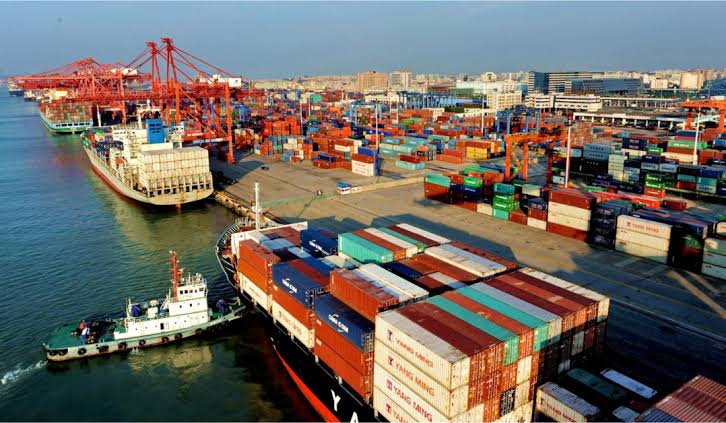
The Federal Government has been urged to take urgent steps toward unlocking the vast economic potential of Nigeria’s blue economy, particularly by decentralising port operations and fully utilising underdeveloped maritime assets in the Niger Delta.
Delta State Commissioner for Works (Rural Roads) and Public Information, Charles Aniagwu, made the call during a television interview in Asaba on Friday.
Aniagwu stressed the importance of the South-South as the country’s natural maritime hub, noting that all states in the region share borders with the Atlantic Ocean. However, he said the overdependence on Lagos’ Apapa Port continues to stifle the sector’s growth.
“The Niger Delta houses multiple viable port locations from Warri, Koko, Sapele, and Burutu in Delta to Onne in Rivers, Ibom Deep Seaport in Akwa Ibom, and Calabar Port in Cross River yet they remain grossly underutilised,” Aniagwu said.
According to him, decentralising port services and revamping infrastructure in these regions would ease pressure on Lagos, improve cargo flow, and catalyse economic activity across the federation.
He noted the state government’s efforts under Governor Sheriff Oborevwori in enhancing regional infrastructure, pointing to a new road project in Asaba leading to the River Niger, which will anchor the proposed Asaba Waterfront City.
Aniagwu noted that with the completion of a dual carriageway from Asaba to Warri, the journey now takes under two hours, creating new opportunities for trade and logistics.
“This isn’t just about mobility,” he said. “Good roads support trade, attract investment, and drive inclusive growth. It’s all interconnected.”
The commissioner also advocated for the dredging of the River Niger and the establishment of a functional port in Lokoja to enable seamless cargo movement to the Middle Belt and the North.
“Modernising and expanding these ports will reduce our dependence on oil, diversify the economy, and enhance Nigeria’s position in West African maritime trade,” Aniagwu said.
He emphasized the need for comprehensive reforms, investment in large-capacity port infrastructure, and the creation of supporting logistics networks and free trade zones across regions.
Improved port efficiency, he added, would also reduce heavy-duty truck traffic on highways, preserving road infrastructure and cutting transportation costs.







Post Comment