Delta Assembly Raises 2026 Budget to ₦1.729 Trillion, Highlights Development Achievements
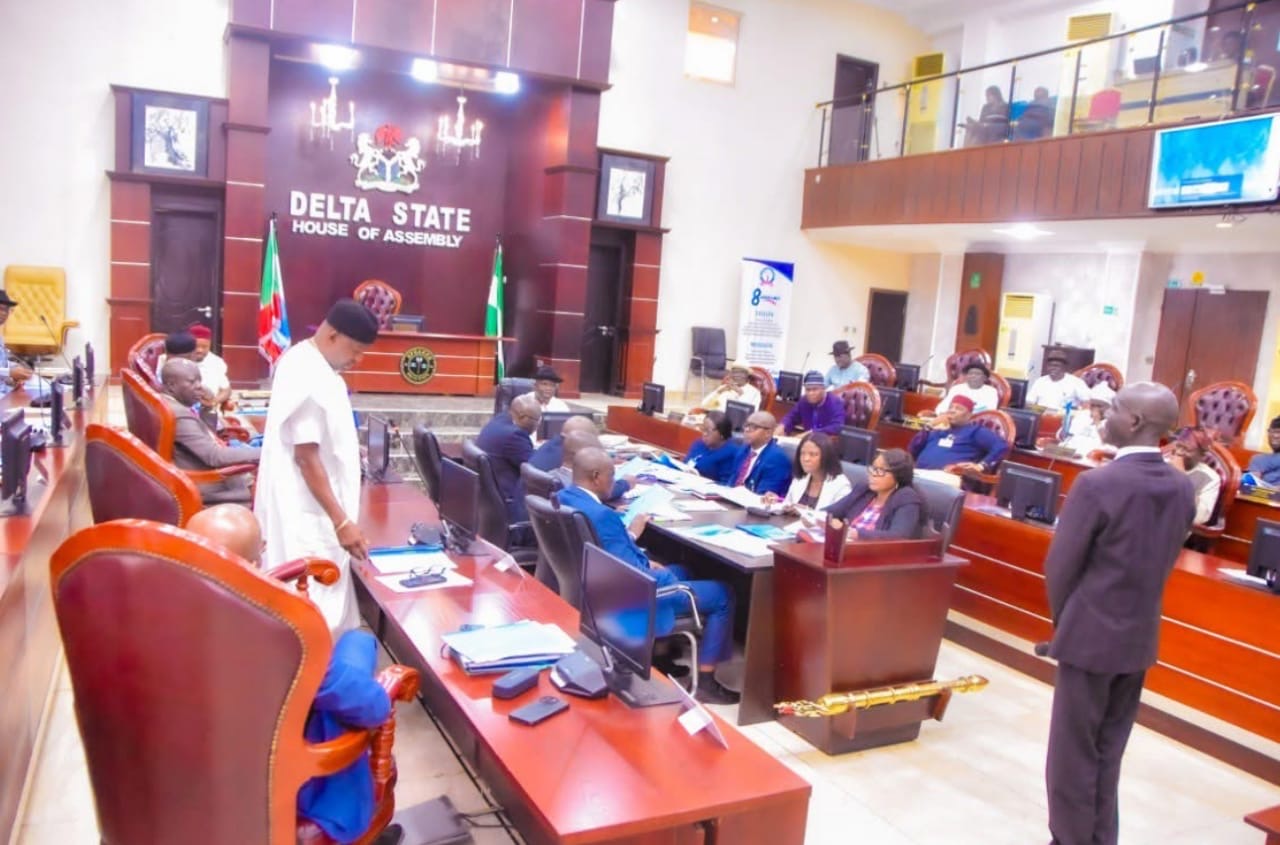
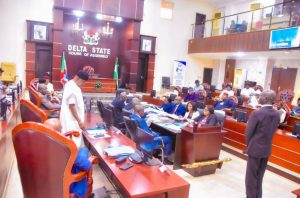
Speaker of the Delta State House of Assembly, Guwor Emomotimi Dennis, has explained that the Assembly increased the state’s 2026 budget estimate from N1.664 trillion to N1.729 trillion to ensure adequate funding for key projects and programmes aimed at improving the welfare of residents across Delta State.
He stated that the proposed Delta State Revenue Service Bill is designed to streamline revenue collection, eliminate multiple taxation, and create a more conducive environment for businesses, thereby attracting greater investment into the state.
Guwor disclosed that the House successfully screened and confirmed nominees for appointment into the Delta State Civil Service Commission, the Delta State Structure for Signage and Advertisement Agency, and the Delta State Judicial Service Commission as part of its constitutional responsibilities.
The Speaker further revealed that the Assembly approved the Auditor-General’s reports on the accounts of the Delta State Government, the Delta State Oil Producing Areas Development Commission, and the 25 local government councils for the financial year ending December 31, 2024.
He reaffirmed the commitment of the 8th Assembly to its constitutional mandates of lawmaking, oversight, and representation, noting that the legislature remains focused on supporting policies and initiatives that drive sustainable development in the state.
Speaking during a press briefing in Asaba to commemorate the third anniversary of the 8th Assembly, Guwor said the House has maintained a productive working relationship with the Executive arm of government while upholding the principle of separation of powers. According to him, this collaboration has facilitated the effective implementation of Governor Sheriff Oborevwori’s M.O.R.E Agenda.
The Speaker noted that the partnership between both arms of government has contributed significantly to infrastructural development and improved service delivery. He pointed to the construction of flyovers in Uvwie, Warri, Ughelli, and Agbor, the expansion of road networks connecting rural and urban communities, enhanced healthcare services, and continuous development efforts in riverine areas.
Providing an overview of legislative activities during the Assembly’s third session, Guwor disclosed that the House received 11 bills, comprising five Executive Bills and six Private Members’ Bills. Of these, five have been passed, while four have already received the Governor’s assent, with the Delta State Revenue Service Bill, 2026, currently awaiting approval.
Among the bills passed by the Assembly are the Appropriation (Amendment) Bill, 2024; Delta State Anti-Terrorism and Anti-Cultism (Amendment) Bill, 2025; Delta State Appropriation Bill, 2026; Supplementary Appropriation Bill, 2025; and the Delta State Revenue Service Bill, 2026. He also highlighted the establishment of a Post-Legislative Scrutiny Department, supported by the Westminster Foundation for Democracy, to assess the implementation and impact of laws enacted by the legislature.
Guwor added that the Assembly has gained national prominence, citing his emergence as Chairman of the Conference of Speakers of State Legislatures of Nigeria, while the Deputy Speaker and Majority Leader also secured key leadership positions at the national level. He emphasized the Assembly’s commitment to staff welfare through training opportunities, professional development programmes, implementation of the Consolidated Legislative Salary Structure (CONLESS), and the ongoing construction of a dual-purpose complex for the Assembly Service Commission and Assembly Clinic. He assured Deltans that the 8th Assembly would continue to champion people-centered legislation, strengthen oversight functions, and support policies that promote peace, growth, and prosperity across the state.






Post Comment