Borno Govt Reintegrates 720 Repentant Terrorists After Rehabilitation
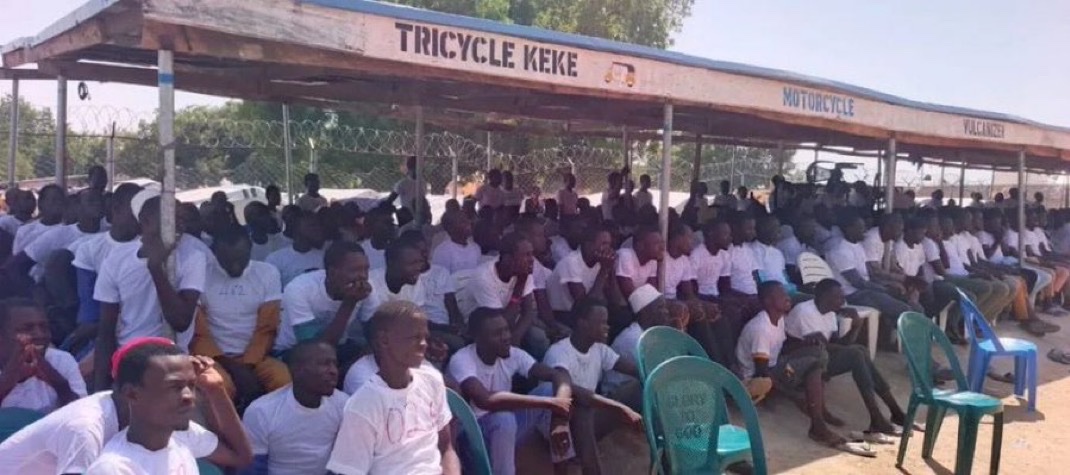
The Borno State Government has reintegrated 720 repentant former insurgents, along with 992 spouses and 2,050 children, into their communities under its non-kinetic counter-insurgency initiative, the Borno Model.
The beneficiaries, classified as low-risk and minor participants in Batch 9 of the programme, completed deradicalisation, disarmament, rehabilitation and vocational training at the Hajj Camp in Maiduguri before being returned to their respective communities.
Speaking during the reintegration ceremony on Friday, the Special Adviser to Governor Babagana Umara Zulum on Security and member of the State’s Deradicalisation, Rehabilitation and Reintegration Committee, retired Brigadier-General Abdullahi Ishaq, described the exercise as a significant milestone in the state’s efforts to combat insurgency through non-military measures.
According to him, the programme has made notable progress since its launch on July 5, 2021, following growing acceptance by communities of former insurgents willing to renounce violence and embrace peace.
“Today, the Borno Model is widely regarded as one of the most effective non-kinetic counter-terrorism initiatives, with more than 350,000 individuals voluntarily surrendering and exiting insurgent camps,” Ishaq said.
He noted that many of the beneficiaries chose to surrender after receiving encouragement from former insurgents who had successfully reintegrated into society.
“Their journey back to society began when they responded to calls from their colleagues to abandon violence, surrender to the authorities and reunite with their families,” he said.
Ishaq explained that those who surrendered were screened and profiled by the military, while their weapons were handed over to security agencies before they were transferred to the Hajj Camp for rehabilitation.
The programme included religious instruction, counselling, hygiene and drug abuse awareness, as well as vocational training in trades such as metal fabrication, carpentry, tailoring, pottery, bricklaying, barbing, cap-making, mobile phone repairs, solar installation, vulcanising and motorcycle repairs.
Their spouses also received training in catering, knitting, tailoring, soap production and other income-generating skills.
He disclosed that 8,960 beneficiaries had previously been reintegrated in Batches 1 to 8, bringing the total number of beneficiaries under the programme to 9,680.
The latest batch was drawn from Bama, Konduga, Maiduguri Metropolitan Council, Jere, Mafa, Dikwa, Gwoza, Damboa, Marte, Monguno, Kukawa, Ngala, Kala-Balge and Gubio local government areas.








Post Comment